Local History and Genealogy

Thursday, July 15, 2010

Fremont Settler

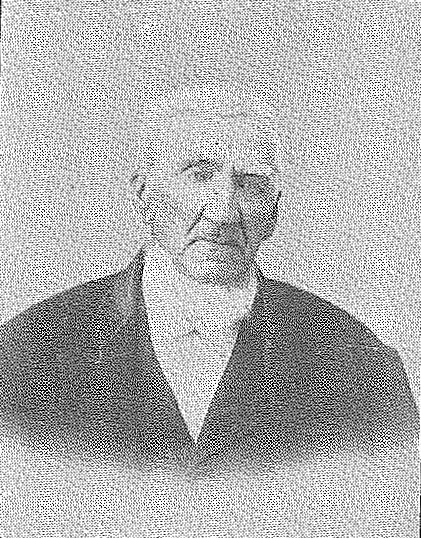
Demary or Demery Tillotson, the oldest settler of Fremont Township, was born in Pittsford, Monroe Co., N.Y., April 26, 1810, a son of Nathan and Mary (Kellogg) Tillotson, early settlers of Monroe County.
In August, 1835, he came to Steuben County and settled on section 28, Fremont Township.
Mr. Tillotson was the second settler of the township; the first, John McMahon, preceded him about an hour, and was preparing to feed his team when Mr. Tillotson drove by.
During the first few weeks after Demary Tillotson settled in Fremont Township, his only shelter was a few boards set against a tree. His uncle, Jeremiah Tillotson, built the first log house and he built the second. Bears would come sniffing around the houses, being not in the least afraid. Wolves were prowling around nights and would frequently venture close to the cabins.
He opened up a farm where the Noyes place is now located, near the depot at Fremont, then known as Willow Prairie. He lived on this place four years and in 1839 settled where he now lives.
He was married April 12, 1835, to Harriet Shepard, a native of New York, and to them were born six children-Jerome, William, Truman T., Merritt, and two who died in infancy. Mrs. Tillotson died March 18, 1850.
In January, 1853, Mr. Tillotson married Mrs. Sarah (Thomas) Pheneice, a native of Franklin County, Pa., born Oct. 5, 1824, widow of James Phenecie. To them born two daughters-Sarah, wife of Homer Withtington, and Ida. Mrs. Tillotson died July 21, 1883.
History of Steuben County 1885
Demary Tillotson died in Fremont March 4, 1896.

Angola Grows With Coming Railroad

 Spurred by the enthusiasm growing out of an unusual building program the people of Angola had big dreams of a large growing city. But one thing was lacking -- there was no railroad.  For ten years they had relied solely on the Michigan Southern and Northern Indiana railroad with Waterloo the nearest point of contact.  This was 14 miles away over roads which were sometimes abominable.  The railroad made overtures for a road from Waterloo, but the cost was outrageous.  Frequent meetings were held with the view to getting Michigan lines interested in building a railroad from the central part of that state down through Angola to Fort Wayne.  A sample of the spirit and feeling is reflected in this item in the Republican on June 11, 1867.

Railroad Meeting

A meeting will be held in Angola at one o'clock p.m.on Saturday, 22nd last inst. for the purpose of considering what is necessary to secure Steuben county the blessings of a railroad.  Let no man or woman who is interested in promoting the best interests of the county fail to come.  Distinguished speakers from abroad will be present, and a Brass Band in attendance.

Come one.  Come all.  This is our last opportunity to secure the blessings of a Railroad and destroy outrageous monopoly which the Michigan Southern and Northern Indiana Railroad now exercises over us.  Again, let everyone be present.

Finally a railroad was projected as the Fort Wayne, Jackson &  Saginaw Railroad, with the expectation of commanding patronage from Bay City and Lake Michigan.  Subscription lists were circulated and thousands of dollars subscribed to finance the new enterprise, the subscribers to take stock certificates for the money invested.  Several of these stock certificates are still in existence in this area, and annual meetings of the stockholders are still held in Jackson, Michigan.  Railroad prospects were the topic of nearly every conversation and all sorts of matters came up for discussion.  Here is a sample taken from the Republican of December 17, 1868:  "It is not known on what side of town our railroad will be located - whether on the east or west.  The chief surveyor is now here and will run a survey on the west of town." But finally the railroad came into operation, the first train coming into Angola on January 3, 1870.  Said the Republican of that event:
"The first passenger train, with the officers of the road on board, arrived on the Ft.W.J.S. Railway  at noon today and notwithstanding the cold weather, nearly every man, woman and child in town and vicinity, have turned out to see it.  It is a welcome visitor, and never have our people felt a greater pride in any one thing than they do this opening up of railroad communication with the great Saginaw valley and the country at large.  We can only compare this event to the breaking of the clouds during a storm when the bright rays of the sun burst forth, sending a thrill of joy to every heart.  It is certainly an event which will be long remembered by our citizens and the people of Steuben County.  And now let the glad tidings go forth to all the world that Angola is now a railroad town!"

Locomotives on the new railroad were wood burners, and wood yards were established at intervals along the line, and the train crew had the job of filling the tender with firewood whenever the train stopped to "wood up".  The railroad never reached a high state of patronage throughout the line, and it was finally absorbed by the Lake Shore & Michigan Southern Railway, which had consolidated several lines of the Michigan Southern and Northern Indiana Railroad, eventually to become a cog in the wheel of the great New York Central system.  The railroad continues to operate in through Angola, formerly doing a big business before the day of the automobile, but now reduced to meager freight traffic.

With the coming of the railroad to Angola there was an immediate response in the development and growth of the town, particularly  in the western section.  On February 2, 1870, the Republican printed the following: "We learn that J.A. Woodhull Esq. had purchased the Bart Cary farm west of the depot grounds in this place, and that he contemplates laying off an addition to the town.  those desiring building lots will do well to call and see him before purchasing elsewhere.  The location is the most pleasant of any in or about town:.

Within two months the plat for the Woodhull addition west of the railroad was filled, according to the newspaper item of April 20, which reads:  "We noticed in the Recorder's office the other day a fine plat of Woodhull's addition to the village of Angola.  One of the leading features is the width of its streets and alleys; the former are 66 and the later 33 feet.  Add this to the warm, dry soil and the view of the town, railroad, and surrounding country, and we can understand why the lots in this addition are selling so fast."

Mr Woodhull for the most part named streets for in his addition for prominent men who bought lots in the area.  However three streets were named after the railroad -- Fort Wayne, Jackson, and Saginaw.  The name Fort Wayne was later changed to Moss, and these streets still bear these names.

Herald Republican October 23, 1957

Thursday, July 1, 2010

Early Settlers of Angola Faced Wolves and Indians told by Louisa Gale Hendry

Mr. and Mrs. A.W. Hendry built one of the most pretentious homes in Angola, which was purchase by Dr. Don Cameron and remodeled to become the present Cameron Hospital.  Mrs. Hendry (Louisa Gale)  in her advanced years gave a fine account of early life in Angola.

"When we moved to Indiana, " said Mrs. Hendry, "I was ten years old.  We had a team of horses and moved in wagons.  We came through what is known as the Black Swamp and located where the town of Lima (now Howe) stands.  Father laid out the town".

"We came from Lima to Griswold's sawmill, now called Flint.  Mr Stealy lived here (Angola) before we came.  When we came to Angola no one but Cornelius Gilmore's family and ourselves lived here".

"Most of the public square was then timberland.  It was not heavy timber, but more of a thicket.  There was one large walnut tree tree standing just east of where Hotel Hendry (southwest corner of W. Maumee and Elizabeth St)  now stands.  It was sawed down and the stump was large enough for a table.  Walnut timber was very plentiful, and there was a number of trees in our field.  There was a large pond just northwest of the where the public square is now".

"We young people did not have any amusements then.  We had to work and assist our parents all we could in cleaning land and making a home.  We could sometimes wander in the woods, but it was not safe to go on account of snakes, wolves, Indians, etc. What amusements we had consisted of  of spelling and singing schools and amusements of a very mild type".

"What did we have to eat?  Well not very much.  Our principal eatables were bread, pork, and potatoes; we had plenty of this but could nor sell pork and potatoes, as there was no market for them.  We bought berries of the Indians when we could get them.  I was quite a girl before I ever saw a peach.  Sugar was very hard to get.  If our sugar or tea began to get low or run short we just had to make it last until we would be able to get more,  We would drive to Detroit and Monroe where we bought goods.  It was a better harbor than Toledo, which was a small place then.  We went to a little place called Union Mills (now Mongo) to get flour.  When we went to mill, two or three families would go and put two or three yoke of oxen to one wagon".

"James Gale and his mother came here from Crawford county, Ohio in 1837, and entered land south of town.  One night Jesse Gale's mother wanted to go to church, some of us went to stay with Jesse and the younger children, and we were all much frightened because of the barking of wolves.  We found the wolves more attracted by a pen of sheep.  The men were usually good marksmen and carried their guns with them for protection when they went to work.  As the county became more settled the wolves disappeared".

"The first school we had was taught right in our home, which stood where Hotel Hendry now stands.  Soon after this we rolled logs together and built a school house a short distance west of our house".

"When we moved here it was father's intention to start a county seat.  He had helped about locating the county seat in Lima (Howe), and several other county seats.  He was a great hand to get something started.  We had engineers come and lay out the town.  After Mr. Gilmore's and our house, Louisa Orten's was the next building built, and after that a house was built which is now Dr. T.F. Wood's office."  This house stood just west of Hotel Hendry".

"The first field that was plowed was a little north and east of what is now the public square.  The first death that I remember was a child of Mr Gilmore, he was a year or two old.  It was right in the middle of winter and the ground was covered with snow.  The best place we could find for a grave was what is now the old cemetery.  Two acres were donated for a graveyard, and this was our first burying ground".

"When we first moved here this was the Indians camping ground; but the Indians did not stay long after the country was settled.  The government soon sent them away"

"Frank Sowle had the first saloon here. He began by keeping a restaurant, selling pies and cakes, and later began selling liquor".

Wednesday, June 23, 2010

Concert Hall Block Retains Its Ornate Architectural Design Over 80 Years

Another picture of the Central Block which was erected on the public square in 1873-74 has come to light in a collection owned by Senator Willis K. Batchelet, and shows that the building was quite pretentious for its period.  Occupying two lots it surpassed its neighbor, the Patterson block also a three-story building across the street but which was constructed only on a single lot.  At the left was flanked by the Union Bank constructed near the same time.  At the far left may be seen a portion of a frame building which was the old Orton Eagle House, the present location of the Odd Fellows block, the home of J.C. Penny store.  The Pow bank occupied the corner room in the block while Sowle& Bodley store bordered on both sides with two entrances.  The I.M. Sowle and Co. merchant tailors were on the second floor facing the public square and further to the rear was the Domestic Sewing Machine Rooms.  The Milo Dawson grocery store occupied the small frame building back in the corner of the square.  Concert Hall occupied the entire third floor of the double block. this room still being intact today.

Steuben Republican March 13, 1957

Tuesday, June 15, 2010

4th of July buried on Angola square more than a century ago

     More than a century ago, the city of Angola celebrated the 4th of July in a most unique and bizarre fashion.
     Mrs. Jesse Greenamyer of Angola found a clipping noting the "festivities" and submitted it.
     A Fourth of July celebration had been advertised for Angola.  Bills had been freely circulated and masks
procured for a fantastic parade which promised to be immense.  Before the day arrived for the jubilee, however, an attempt was made to collect money from the business men of the town to pay the expenses, but
they refused to put up the necessary funds.  When this fact was learned, those who had the matter in hand declared the celebration off and then resolved to publicly bury it.
     On the morning of July 4, 1859, the people of the town, who were not let into the secret, were surprised to find a grave twelve feet long and three feet deep, at the northeast corner of the public square, and curiosity was at a high pitch.  In the meantime about fifty men had assembled at Nichols and Miller's wagon shop south of the public square and organized a fantastic parade, and before the people of the town had an inkling of what was being done, the procession had started, and a weird, grotesque and solemn scene it presented.
Every man wore a false face, so that his nearest friend could not recognize him more than if he had been a native from the wilds of Africa.  At the head of the parade rode the captain, W. C. Weicht, on a jackass.
His face was covered with as horrid a looking mask as one could imagine; in his right hand he carried a sword, his feet were encased in two paint kegs for stirrups and with mammoth spurs he goarded the jack.
Next came the musicians, Chris Stealy playing the fife, Henry Nichols the snare drum, and Thomas R.
Moffett the bass.  Following them were the pall bearers carrying the coffin the which had been placed a dummy with a mask for a face.  The casket was covered with a thick, black pall.  Following this, with slow,
measured tread, came the balance of the company.
     After parading on several of the principal streets where they were seen by scores of wondering people,
they surrounded the grave where the pall was removed and the coffin gently lowered amidst the groans of the mourners.  Asa M. Tinker then delivered a solemn oration over the remains.  Just before the close of the
exercises, while Mr. Tinker was in the midst of the most impressive part of his address, a man drove by with a horse, and jack struck up its doleful tune.  At this juncture the captain gave it a jerk to make it hush, when they both fell into the grave, to the great consternation of the chief mourners.  After quite a struggle, the animal, with the captain still on its back, got out on good footing.  The grave was then filled, with the coffin left at the bottom, and thus it remains to the present day.
Steuben Republican, June 26, 1974.

Friday, June 4, 2010

Silas Doty

Silas Doty, Noted Character of the 40's, Tried for Murder Here

Nearly 100 years ago there roamed over the hills of northeastern Indiana a notorious character bearing the name Silas Doty.  He was born in St. Albans , Vermont, May 30, 1800.  His parents were Christian people.  But in spite of their teaching he grew up an incorrigible boy.  The exploits of his early life began in the state of New York and extending into Ohio, Indiana and Michigan, embraced burglary and every kind of larceny and the making and disposing of counterfeit money.  IN 1825 while living in Franklin County, New York he married Miss Sophia Adams, a girl of good family, and for a time refrained from his evil ways. Later, falling in with some old companions he drifted again into his old ways.  He was at different times arrested but manage to escape conviction by means of false testimony given by confederates.  In 1834 he removed his family to Lenawee county, Michigan.  Here he resided for five years, during which time he became allied with the Black Legs who operated in southeast Michigan,  northeast Indiana and western Ohio.  He and a companion named Wickes stole a number of valuable horses and other property.  While living here he managed to escape arrest.

In April 1839, he and his family moved to Steuben county, Indiana not far from the little village of Jamestown.  Here he bought a piece of land and set about making it his home,  That summer a young man named Lorenzo Noyes came along looking for work.  Mr Doty employed him for the season.  He was a good ox teamster and gave good satisfaction as a laborer.  He was a young man, probably little more than 20 years of age and had no relatives in this part of the country.  He was one of that type not easily influenced and as he got next to Doty's way of doing things they failed to agree and frequently quarreled.  One day Doty threatened to whip him.  He received a cordial invitation to pitch it.  But mauling men was a different proposition from stealing and Doty who was of a rather light build, did not make any move to carry out his threat.  Some time after this they had another quarrel and Noyes called Doty an old thief and threatened to expose him.  Finally he said he would leave and gathering up his clothes he started west.  Doty who did not like to see him leave in such an angry mood followed him and tried to conciliate but the more he talked the more angry Noyes became and finally turned around and began to call Doty hard names and said he would tell all he knew about him.  Doty, who was greatly excited, struck him over the head with a heavy cane.  Noyes fell to the ground, quivered a few minutes and then laid perfectly still.  Doty worked several hours to bring him to but in vain.  The man was dead.  With the taking of this man's life, a terrible feeling of remorse took possession of Doty.  He was at a great stand as to what disposal to make of the body.

About 40 rods north of where the killing took place was a tamarack swamp.  Doty managed by carrying and part of the way dragging to get the body there.  Finding a soft mirey place he forced the body down into it, out of site.  He then covered the place with brush and other rubbish.  He then returned home where he washed the blood stains from from his clothes and went about his business as usual.

When asked by the neighbors concerning Noyes, he replied that he got mad and left.  It was not until 1842 that Noyes body was found.  On the 12th of May that year parties hunting for cattle found the remains.  The coroner of Steuben county was notified and held an inquest at that time.  It was found that the deceased came to his death by violence, namely a fractured skull, and that it was believed that the body was that of  Lorenzo Noyes.  Dr D. B. Griffith, who was present at the inquest, took charge of the body and  it is said preserved the skull for many years.  Suspicion at once rested  heavily on Silas Doty.  In the meantime that character was in trouble again, having stolen a horse on the edge of Michigan.  For this crime he was arrested and sentenced to prison for two years.  Late in 1842 the grand jury returned an indictment for murder against Doty.  The prosecuting attorney of Steuben county was at this time Robert Douglas.  As Doty's sentence did not expire until April 9, 1844, the matter rested for a time.  Doty however, managed to secure able defense council for his defense, John B. Howe of Lagrange county and David H. Colerick of Fort Wayne.  This, the first murder trial in Steuben county, began April 7, 1844, and continued several days.  The counsel for the defense put forth great effort and the result was that the jury failed to agree, eleven of the jurors being for acquittal. It is said that the crowd was so great that it swayed the court house to the east several inches.  On the prayer of Mr. Doty his case was taken on change of venue to Allen county.  He remained in jail at Angola until fall when his trial was held at Fort Wayne.  This trial was full of interest as the former one, many witnesses from Steuben county being present and even the skull of the murdered man was brought in as evidence.  The result of this trial was that Doty was found guilty of murder in the second degree, and was given a life sentence.  He was taken to Jeffersonville where he remained a year or more at hard labor.  His attorneys, after some delay, got the case before the Supreme Court, where the decision was reversed.  Doty was granted a new trial and returned to jail in Angola.  As Mr. Colerick and Mr. Howe did not want to risk another trial in Steuben county, they got a special act of the legislature for a trial in LaGrange county.
About this time Doty broke out of jail by sawing a hole through the floor.   He was soon captured  and brought back.  With a view of making escape impossible, a pair of fetters connected by  12 inches of chain weighting 19 1/2 pounds were riveted on his ankles, Doty had secreted two steel case knives under his clothes, and with these which he fashioned into saws, he sawed the iron bars of his prison window loose and again made his escape.  Going to the prosecuting attorney's barn he took his horse, which was an unusually good one, and rode to his home, riding sideways on account of his fetters.  Here, with a cold chisel he soon removed his shackles,  Bidding his family adieu, held the country.  At this time the Mexican War was raging and Doty did not stop until the borders of that country were reached.  He joined General Taylor's army and served till the close of the war.  He then drifted back to Michigan where his family was living near Hilldsale.  Here he seems to have got in bad again as he was soon arrested, probably for stealing.  His trial was held at Hillsdale and the judge, knowing something of his past activities gave him a 17 year sentence.  By good behavior he was released after 15 years.  Strange to say, after his release he soon got into trouble again and served two other terms, one of two  and one of four years.  He was now in the late autumn of life with it's sear and yellow leaf and winter's frosts were settling on his withered brow.  A third of his life had been spent in prison.  After he finished his last prison term in went to the home of his son in Reading.  Here he died March 13, 1876.  In his last days he confessed to much of his ill doing and came to a full realization that his life emphasized the truthful saying, "The way of the transgressor is hard."

Silas Doty was a man, in many respects, of more than ordinary ability and might have made a record in a legitimate line of business that would have been a source of pride to his relatives and friends.  His children seem to have inherited their mother's traits of character rather than his and were all highly respected citizens.

Written by Homer H. Brown
Steuben Republican January 5, 1938


Old Sile Doty

Old Sile Doty is dead.  He died at the residence of his son, William Doty, in Reading, Michigan last Sunday evening, the 12th aged 77 years.
Who does not remember Old Sile Doty?  The widely known, inveterate and persistent old thief that ever infested this part of the world, so peculiarly constituted that he would steal for the fun of it, steal from wealthy or well-to-do and give generously to his poor or destitute neighbor - for he was kind and generous.
Old Sile Doty has been for the last thirty-five years, in his line, the most notable character we have ever had in our midst.  His career in this county and in the counties of Hillsdale and Branch has been so well known that the announcement that it has now come to an end will revive in memory the old time of his many peccadillos.  More than half his life has been spent within the walls of prison, but he hardly took his incarcerations as punishments.  He regarded the penitentiary as his home and was ill at east outside it's walls.  But his body has now reached its last great earthly prison, and will not be released until the lapse of time shall usher the resurrection day and the last sentence pronounced to a court far above that of human wisdom or mercy.

Steuben Republican March 15, 1876

Saturday, May 29, 2010

Memorial Day 1954

Colorful Ceremony on Memorial Day Marked By Band and Parade

Calling for a renewal of the patriotic fervor of earlier days, in a spirited address here last Sunday, Judge Lowell Pefley of the Whitley county circuit court deplored the disinterest in public affairs on the part of the citizenry which fails often to avail itself of even the right to vote.

Judge Pefley spoke at the annual Memorial Day service in Monument Place in Angola Sunday noon. The service was attended by the usual large crowd of interested patriotic citizens.  Preceding the program a parade was  formed several blocks west of the public square and marched to the mound surrounding the imposing Steuben county memorial to the veterans of the war of 1861 to 1865. 
Maurice Whitlock was the parade marshal.  Merritt D Boyer, past commander of Angola Post 31 American Legion served as general chairman, aided by members of the post headed by George C. Myers as commander. The parade including three bands from the Angola schools, patriotic organizations, Angola school children, Boy Scouts, American Legion members, and members of the Veterans of Foreign Wars.  Traffic on the two U.S. highways was detoured through Angola during the Memorial observance.

So far as can be ascertained, the custom of decorating symbolic graves on the mound began shortly after the organization for the Grand Army of the Republic Post in Angola, mustered March 29, 1883, and named for Lt, Col Baldwin H Crosswaite of the 44th Indiana Volunteers, who was killed Feb. 18, 1862, at the age of 40.

At first, wooden markers resembling shingles were placed about the mound for Memorial Day observances, these being kept for many years in the GAR headquarters on the public square overlooking the mound.  Following World War I, the American Legion replaced these crude markers with the present day white crosses which are placed in the four segments of the mound early each Memorial Day.  More than 1,200 volunteers went from Steuben county to serve in the Civil War, out of a total population of 10,000, and Steuben county's patriotic record has been sustained throughout the years since Dan Wisel, Steuben county's last surviving Civil War veteran, died at his home in Salem Township Jan 3. 1940 at the age of 102.

Citing the four freedoms of which all should be conscious, Judge Pelfrey said, "And I would, add a fifth freedom, which we also tend to forget and that is the freedom we have as citizens to help our neighbors in time of need, our freedom, as we wish, to help and old lady to cross the street, to help the orphans in Korea, and to help the hungry and the needy wherever we wish, a freedom denied those living under the shadow of Communism, and behind the Iron Curtain, where a man is forced to forget unselfishness and where the atmosphere denies him the right to be generous and to help his neighbors.

Following the posting of the colors, in which units form the Angola American Legion Post participated, the invocation was given by the Rev. Kenneth Hornbuckle, pastor of the Congregational Church.    Following music by the Angola High School Band, directed by Elwood Nichols, flowers were placed about the white crosses by the school children of Angola, Judge Pefley was introduced by Glen S, Beatty, Mayor of Angola, and following hi address a benediction was given by the Rev, Norman Kistler, pastor of the Fairview Missionary Church and the firing squad of the American Legion gave salute to the dead with "Taps" by Roy C, Bodie Jr.


Steuben Republican  June 2, 1954
Pictures property of Carnegie Public Library of Steuben County