Local History and Genealogy

Saturday, August 7, 2010

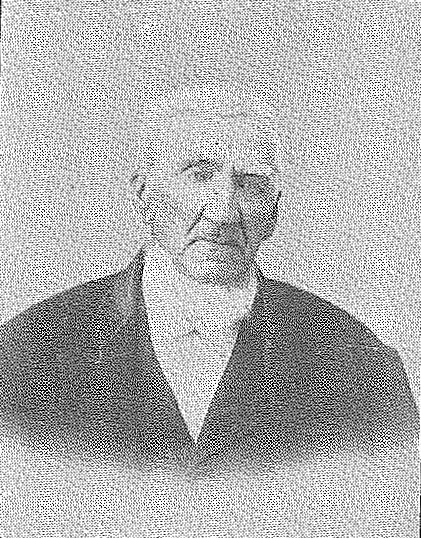
John Fee

John Fee, the first settler of Otsego Township, was born in Gallia County, Ohio, October 13, 1810.  His father William Fee, was a farmer, and to that avocation the son was reared and made it the successful pursuit of his life.  He was nineteen years of age when hi father with family settled in Williams County, Ohio.  He had a family of twelve children, of whom John was the second child.  William Fee, after making a little improvement and shelter for his family, went back for money to pay for his land and on his return was taken sick and died before reaching home, leaving the family in limited circumstances.
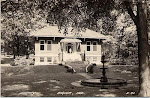
Fee Homestead

John Fee and Mary A. B. Houlton were married April 9, 1833.  She was born in Highland County, Ohio, April 9, 1811, a daughter of Samuel Houlton, one of the first settlers of Chillicothe, Ohio.  At the time of their marriage Mrs. Fee was residing with her brothers, Samuel and John Houlton, in Williams County, Ohio.  John Houlton settled in DeKalb County the same year, and was the first settler of that county.  Mr. and Mrs. Fee lived on Samuel Houlton's farm as renters until 1835, when they came to Otsego Township, being the first white family to make their home here, and located 120 acres on section 32.  Mr Fee was a man of great energy and force - the man for a new country.  It gave him room, and brought into action his inferent force of character.  He became one of the largest land owners in the county, at one time owned about 1500 acres, not all in this county.  His home farm on section 32 and 33 and adjoining land land over the line in DeKalb County, contained about 700 acres, now making several farms divided among his children.  Mrs Fee cooked and carried herself a dinner to the men employed in raising the first building ever erected in Hamilton.  Nine children were born to them.  Calvin; Clarind, wife of A. L. Nichols; Margaret R., wife of A. J. Carpenter; John; Ann, wife of L.T. Crain; William and Frank.  Mr Fee died April 2, 1873.

Wednesday, August 4, 2010

Princess Kil-so-quah

Daughter of Miami Chieftain Coming - To Attend the Old Settlers' Meeting in Angola August 14th.

Frank L Adams, president of the Old Settlers meeting, has closed a contract to have present at the coming meeting in August, the famous old Indian lady, Kil-so-quah, aged 103 years, daughter of Chief Little Turtle.  One of the greatest previous attractions for the Old Settlers was Chief Simon Pokagon, and now Kil-so-quah will be no less an attraction.,  Mr Adams is surely arranging a fine list of entertainments for the meeting August 14th.

Chief Little Turtle, who was the father of Princess Kil-so-quah, was a Miami chieftain, which tribe roamed through the Wabash valley prior to the coming of the white man.  He was quite well known to the early settlers and was a friend to them.  His grave is in Allen county.  The princess, and there is no question concerning her royal Indian ancestry, now lives in Huntington county, this state, and although she is more than a hundred years old, she retains a vivid recollection of those early days.  Because of her advanced age, it is not possible for to make many long journeys, and the people of Steuben county are fortunate that they are assured her presence on this occasion.  She will speak at the program for the old settlers exclusively in the Methodist church in the morning, and if possible will appear on the afternoon program in the courtyard.  She is probably the last full blooded Indian in Indiana.


Steuben Republican July 16, 1913

Old Settlers Day - August 14, 1913

Kil-so-quah, the Indian princess was here according to agreement, but was so feeble and sick that she could have but little part in the exercises.  Looked as if this would be the last old settlers meeting for her.  The truth is she ought not to have come, for to ask a woman 103 years old and sick to ride 130 miles in an automobile in one day is out and out cruelty.  When  the son was asked why he did so, he answered by saying, "We needed the money."


Steuben Republican August 20, 1913

Monday, August 2, 2010

Jesse H. Carpenter

Jesse H Carpenter was born in Erie County, Ohio, July 12, 1837, and was the son of Harlow J. and Fanny (Mery) Carpenter, he a native of Vermont and his wife of Connecticut, who settled in Otsego Township, of this county, in 1850.   Jesse did not come until the spring of 1851, having remained in school in Ohio.  He began teaching at Hamilton shortly after coming to this county.  At the age of 19 he was appointed station agent at Lawrence, Ohio which he held for three years.  He then went to Illinois, and engaged in farming for three years until the outbreak of the civil war.  He enlisted in the volunteer service in April 1861, but the quota of the first call was filled before his organization reached Springfield.  In July he again enlisted in Chicago and was taken to New York City where on September 8,1861 he was mustered into the U.S.Service as a private in Co. B 1st New York Marine Artillery. He was assigned to the gunboat Vidette and was with General Burnside's expedition to Hatterass Inlet, and the capture of Roanoke Island, and Newburne.  On March 16, 1863, he was mustered out of the navy and soon re-enlisted in the U.S. Engineering Corps. in which he served until September 1863

After the war he returned to Otsego township and engaged in farming with his father.  He served as trustee of Otsego township five years and in 1874 was elected auditor of Steuben county and moved to Angola, where he has since resided.  When a young man he became a member of Angola Lodge 236 F. & A.M., and subsequently of Angola Chapter, Angola Council, and Apollo Commandery Knights Templer of Kendallville.  Upon the organization of Angola Commandery he became a charter member.  He was a charter member and assisted in the organization of B.J. Crosswaite, Post G.A.R., April 29, 1883, after was a post commander in 1888, after which he was for 17 consecutive years post adjutant.  In May, 1898 he was elected Junior Vice Commander for the department of Indiana, and in 1902, was appointed inspector for that year, all of which offices he filled with credit.

He was married to Francis M. Brown September 29, 1870, she died May 31, 1893.  To them was born one son, Robert H.   On Jan 11, 1900 he was married to Mrs Susan Dutter Truesdal.


Jesse H Carpenter died at his home in Angola, February 22, 1905, aged 67 years, 7 months and 10 days.

Steuben Republican March 1, 1905
Atlas of Steuben County Indiana 1880

Friday, July 23, 2010

John K. Folck - Scott Township


John K Folck a native of Pennsylvania, born April 30, 1823 died in Steuben County Indiana March 20, 1907.  When he was four years of age his parents, Abram and Hannah Folck, moved to Knox County, Ohio, and thence to Morrow County, where he was reared.
In 1841 he came to Steuben County, with a view of making it his place of residence. He made the journey alone and on foot, but returned to Ohio and in 1845 came again to the county and selected a tract of land and girdled the trees for future clearing. In 1847 he moved to the county and settled on the land where he lived until he died, on section XI, Scott Township.  His farm contains 160 acres of valuable land.
The brick schoolhouse of District No. 1 was located on the southwest corner of his land.
Mr. Folck was married in 1843 in Morrow County, Ohio, to Margaret Valentine, who was born in Seneca County, Ohio. She died in 1859, aged thirty-six years, leaving five daughters, Mrs. Sarah L. Weiss, Mrs. Hattie E. Myers, Mrs. Ann E. Dygert, Mrs. Mary A. Henny, Mrs. Rosa T. Fulmer.
In 1860 Mr. Folck married Mrs. Martha Rathbun, daughter of Samuel Nichols.  One son was born to them—Fremont.  Mrs. Folck died in 1863, aged thirty-five years.  
In 1870 he was married to Mrs Louisa Headley, widow of Daniel Headley, an early settler of Steuben County.  
Mr. Folck was a prominent citizen of Scott Township, active in promoting its material interests. He served as Assessor twice and was an Appraiser under the old system.  He cleared the farm with his own hands, and made it one of the best farms in Scott Township. In politics he was an old Abolitionist and became a Republican.  In religion he was liberal,  believing in all good work, and never used either whiskey or tobacco. 

History of Steuben County 1885 pg 639 
Steuben Republican March 27, 1907

Thursday, July 15, 2010

Fremont Settler

Demary or Demery Tillotson, the oldest settler of Fremont Township, was born in Pittsford, Monroe Co., N.Y., April 26, 1810, a son of Nathan and Mary (Kellogg) Tillotson, early settlers of Monroe County.
In August, 1835, he came to Steuben County and settled on section 28, Fremont Township.
Mr. Tillotson was the second settler of the township; the first, John McMahon, preceded him about an hour, and was preparing to feed his team when Mr. Tillotson drove by.
During the first few weeks after Demary Tillotson settled in Fremont Township, his only shelter was a few boards set against a tree. His uncle, Jeremiah Tillotson, built the first log house and he built the second. Bears would come sniffing around the houses, being not in the least afraid. Wolves were prowling around nights and would frequently venture close to the cabins.
He opened up a farm where the Noyes place is now located, near the depot at Fremont, then known as Willow Prairie. He lived on this place four years and in 1839 settled where he now lives.
He was married April 12, 1835, to Harriet Shepard, a native of New York, and to them were born six children-Jerome, William, Truman T., Merritt, and two who died in infancy. Mrs. Tillotson died March 18, 1850.
In January, 1853, Mr. Tillotson married Mrs. Sarah (Thomas) Pheneice, a native of Franklin County, Pa., born Oct. 5, 1824, widow of James Phenecie. To them born two daughters-Sarah, wife of Homer Withtington, and Ida. Mrs. Tillotson died July 21, 1883.
History of Steuben County 1885
Demary Tillotson died in Fremont March 4, 1896.

Angola Grows With Coming Railroad

 Spurred by the enthusiasm growing out of an unusual building program the people of Angola had big dreams of a large growing city. But one thing was lacking -- there was no railroad.  For ten years they had relied solely on the Michigan Southern and Northern Indiana railroad with Waterloo the nearest point of contact.  This was 14 miles away over roads which were sometimes abominable.  The railroad made overtures for a road from Waterloo, but the cost was outrageous.  Frequent meetings were held with the view to getting Michigan lines interested in building a railroad from the central part of that state down through Angola to Fort Wayne.  A sample of the spirit and feeling is reflected in this item in the Republican on June 11, 1867.

Railroad Meeting

A meeting will be held in Angola at one o'clock p.m.on Saturday, 22nd last inst. for the purpose of considering what is necessary to secure Steuben county the blessings of a railroad.  Let no man or woman who is interested in promoting the best interests of the county fail to come.  Distinguished speakers from abroad will be present, and a Brass Band in attendance.

Come one.  Come all.  This is our last opportunity to secure the blessings of a Railroad and destroy outrageous monopoly which the Michigan Southern and Northern Indiana Railroad now exercises over us.  Again, let everyone be present.

Finally a railroad was projected as the Fort Wayne, Jackson &  Saginaw Railroad, with the expectation of commanding patronage from Bay City and Lake Michigan.  Subscription lists were circulated and thousands of dollars subscribed to finance the new enterprise, the subscribers to take stock certificates for the money invested.  Several of these stock certificates are still in existence in this area, and annual meetings of the stockholders are still held in Jackson, Michigan.  Railroad prospects were the topic of nearly every conversation and all sorts of matters came up for discussion.  Here is a sample taken from the Republican of December 17, 1868:  "It is not known on what side of town our railroad will be located - whether on the east or west.  The chief surveyor is now here and will run a survey on the west of town." But finally the railroad came into operation, the first train coming into Angola on January 3, 1870.  Said the Republican of that event:
"The first passenger train, with the officers of the road on board, arrived on the Ft.W.J.S. Railway  at noon today and notwithstanding the cold weather, nearly every man, woman and child in town and vicinity, have turned out to see it.  It is a welcome visitor, and never have our people felt a greater pride in any one thing than they do this opening up of railroad communication with the great Saginaw valley and the country at large.  We can only compare this event to the breaking of the clouds during a storm when the bright rays of the sun burst forth, sending a thrill of joy to every heart.  It is certainly an event which will be long remembered by our citizens and the people of Steuben County.  And now let the glad tidings go forth to all the world that Angola is now a railroad town!"

Locomotives on the new railroad were wood burners, and wood yards were established at intervals along the line, and the train crew had the job of filling the tender with firewood whenever the train stopped to "wood up".  The railroad never reached a high state of patronage throughout the line, and it was finally absorbed by the Lake Shore & Michigan Southern Railway, which had consolidated several lines of the Michigan Southern and Northern Indiana Railroad, eventually to become a cog in the wheel of the great New York Central system.  The railroad continues to operate in through Angola, formerly doing a big business before the day of the automobile, but now reduced to meager freight traffic.

With the coming of the railroad to Angola there was an immediate response in the development and growth of the town, particularly  in the western section.  On February 2, 1870, the Republican printed the following: "We learn that J.A. Woodhull Esq. had purchased the Bart Cary farm west of the depot grounds in this place, and that he contemplates laying off an addition to the town.  those desiring building lots will do well to call and see him before purchasing elsewhere.  The location is the most pleasant of any in or about town:.

Within two months the plat for the Woodhull addition west of the railroad was filled, according to the newspaper item of April 20, which reads:  "We noticed in the Recorder's office the other day a fine plat of Woodhull's addition to the village of Angola.  One of the leading features is the width of its streets and alleys; the former are 66 and the later 33 feet.  Add this to the warm, dry soil and the view of the town, railroad, and surrounding country, and we can understand why the lots in this addition are selling so fast."

Mr Woodhull for the most part named streets for in his addition for prominent men who bought lots in the area.  However three streets were named after the railroad -- Fort Wayne, Jackson, and Saginaw.  The name Fort Wayne was later changed to Moss, and these streets still bear these names.

Herald Republican October 23, 1957

Thursday, July 1, 2010

Early Settlers of Angola Faced Wolves and Indians told by Louisa Gale Hendry

Mr. and Mrs. A.W. Hendry built one of the most pretentious homes in Angola, which was purchase by Dr. Don Cameron and remodeled to become the present Cameron Hospital.  Mrs. Hendry (Louisa Gale)  in her advanced years gave a fine account of early life in Angola.

"When we moved to Indiana, " said Mrs. Hendry, "I was ten years old.  We had a team of horses and moved in wagons.  We came through what is known as the Black Swamp and located where the town of Lima (now Howe) stands.  Father laid out the town".

"We came from Lima to Griswold's sawmill, now called Flint.  Mr Stealy lived here (Angola) before we came.  When we came to Angola no one but Cornelius Gilmore's family and ourselves lived here".

"Most of the public square was then timberland.  It was not heavy timber, but more of a thicket.  There was one large walnut tree tree standing just east of where Hotel Hendry (southwest corner of W. Maumee and Elizabeth St)  now stands.  It was sawed down and the stump was large enough for a table.  Walnut timber was very plentiful, and there was a number of trees in our field.  There was a large pond just northwest of the where the public square is now".

"We young people did not have any amusements then.  We had to work and assist our parents all we could in cleaning land and making a home.  We could sometimes wander in the woods, but it was not safe to go on account of snakes, wolves, Indians, etc. What amusements we had consisted of  of spelling and singing schools and amusements of a very mild type".

"What did we have to eat?  Well not very much.  Our principal eatables were bread, pork, and potatoes; we had plenty of this but could nor sell pork and potatoes, as there was no market for them.  We bought berries of the Indians when we could get them.  I was quite a girl before I ever saw a peach.  Sugar was very hard to get.  If our sugar or tea began to get low or run short we just had to make it last until we would be able to get more,  We would drive to Detroit and Monroe where we bought goods.  It was a better harbor than Toledo, which was a small place then.  We went to a little place called Union Mills (now Mongo) to get flour.  When we went to mill, two or three families would go and put two or three yoke of oxen to one wagon".

"James Gale and his mother came here from Crawford county, Ohio in 1837, and entered land south of town.  One night Jesse Gale's mother wanted to go to church, some of us went to stay with Jesse and the younger children, and we were all much frightened because of the barking of wolves.  We found the wolves more attracted by a pen of sheep.  The men were usually good marksmen and carried their guns with them for protection when they went to work.  As the county became more settled the wolves disappeared".

"The first school we had was taught right in our home, which stood where Hotel Hendry now stands.  Soon after this we rolled logs together and built a school house a short distance west of our house".

"When we moved here it was father's intention to start a county seat.  He had helped about locating the county seat in Lima (Howe), and several other county seats.  He was a great hand to get something started.  We had engineers come and lay out the town.  After Mr. Gilmore's and our house, Louisa Orten's was the next building built, and after that a house was built which is now Dr. T.F. Wood's office."  This house stood just west of Hotel Hendry".

"The first field that was plowed was a little north and east of what is now the public square.  The first death that I remember was a child of Mr Gilmore, he was a year or two old.  It was right in the middle of winter and the ground was covered with snow.  The best place we could find for a grave was what is now the old cemetery.  Two acres were donated for a graveyard, and this was our first burying ground".

"When we first moved here this was the Indians camping ground; but the Indians did not stay long after the country was settled.  The government soon sent them away"

"Frank Sowle had the first saloon here. He began by keeping a restaurant, selling pies and cakes, and later began selling liquor".